My metaphor of a four-note musical chord is a new way of articulating a theory of liberty that resonated through so much of what the founders wrote. Their political thought was a blend of utopian idealism and history-based realism. Participatory government had everywhere failed. In America it might be different. On this “vast Continent unpeopled, with Every advantage of Clymate, Soil, and Situation, for the Accommodation of human Life and the Enjoyment of Liberty,” John Adams wrote, “Where Despotism and Superstition have not established their Thrones” an elevated spirit of public good that was morally and politically superior to individual needs and selfish passions should prevail.[1]
The political theorist Thomas Pangle wrote, “the American Founding came to be dominated by a small minority of geniuses who seized the initiative not merely by conciliating and reflecting common opinion but also by spearheading new or uncommon opinion.”[2] What was particularly new and uncommon was their hope that a unique kind of liberty would take root, blossom, and flourish. America provided a fresh start for humanity. More personal and political liberty would be enjoyed by the citizens than at any previous time in history. Individual state constitutions, the Articles of Confederation, and the Constitution all in turn spelled out how political liberty would be structured. The Bill of Rights protected personal liberty. Yet much more was going to take place in this American experiment in good government.
The protection of personal and political liberty was not just the goal of government: it was the means to a grander end. What I have identified as internal and public good liberty would thrive. Citizens, both as voters and representatives, who had mastered the internal struggle against personal weaknesses and corruption would make wiser political decisions. The goal of a minimally intrusive government could only be achieved through the promotion of this virtue-based liberty. Citizens would understand that liberty was to be experienced not by everyone just “doing their own thing” within the boundaries established by law, but by learning to live virtuously, and by becoming more fully actualized human beings through commitment to the public good.
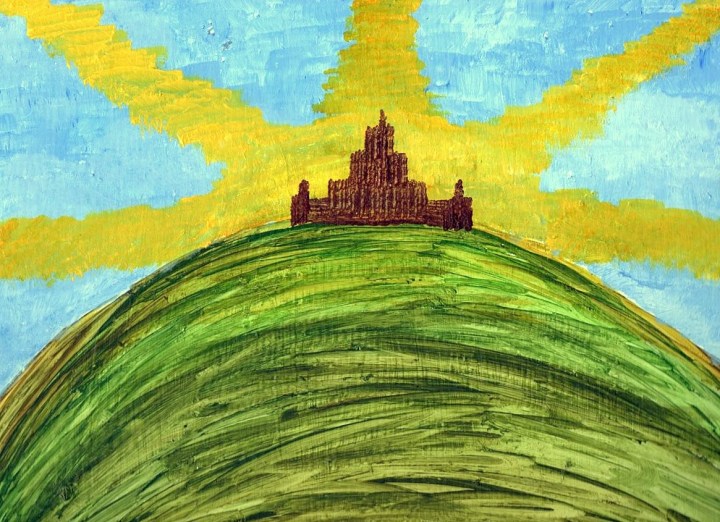
“We shall be as a City Upon a Hill,
the eyes of all people are upon us.”
[1] John Adams to Mathew Robinson-Morris, 14 March 1786, Writings from the New Nation 1784-1826, ed. Gordon S. Wood (New York: Library of America, 2016), 42.
[2] Thomas L. Pangle, The Spirit of Modern Republicanism: The Moral Vision of the American Founders and the Philosophy of Locke (Chicago: University of Chicago Press, 1988), 1.
 Character Mattered